Before You Fall for That Swatch: A Home Light Test for Carpet Colour
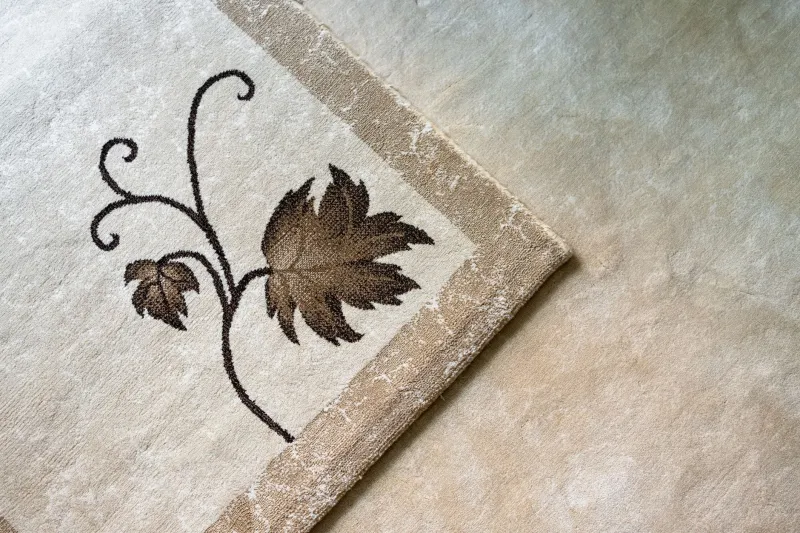
Choosing a carpet colour from a small square in a showroom is a bit like choosing a partner from a passport photo. The basic information is there, but the real thing can feel very different. That is not because the sample is dishonest. It is because a carpet is a textured surface, and texture changes how light behaves.
In a UK home, light is rarely neutral. It is grey and blue on a wet Tuesday, warm and yellow under a table lamp, flat in a north-facing room and almost golden in a south-facing bay. A swatch that looked soft and biscuity in the showroom can turn pink in your sitting room, or grey, or surprisingly dark. Here is how to test a carpet colour at home before you commit.
Why the same carpet can look so different
Showrooms are designed to sell. They usually have good general lighting, pale walls and plenty of space. Your sitting room may have a north-facing window, a dark sofa, a warm lampshade and a rainy view of the street. All of those things affect the colour you see.
Pile direction matters too. Run your hand one way and the carpet can look lighter; run it the other and it can look deeper or slightly different in tone. Wool and synthetic fibres reflect light differently, and a deep twist can look richer close up than it does from the doorway. This is why two carpets that look similar as small samples can feel quite different once they are down.
Step one: collect a proper shortlist
Ask for samples of the three to five colours you genuinely like, not every swatch in the shop. Take them home and leave them in the room for at least 48 hours. Do not judge them on the day you bring them in, especially if you have just come in from bright sunlight or a grey drizzle.
Step two: look at them at different times
Check each sample in the morning, at midday, at dusk and in the evening with the lights on. In a north-facing UK room, the light can be cool and slightly blue for much of the day, which can make warm beige carpets look pinkish and cool greys look almost steely. Under a warm 2700K bulb, the same grey may soften and the beige may glow. Neither version is wrong; you just need to know which one you will live with.
Step three: put the sample where the carpet will actually go
Do not leave the samples in the middle of the floor. Push them against the skirting, next to the sofa, beside the curtains and near the doorway. Look at them from standing height and from the hallway. A colour that looks calm in the centre of the room can look muddy in the shadow beside a dark bookcase.
Step four: bring in the things that live there
Paint charts, cushion covers, a favourite throw, even a piece of furniture. Carpet colour does not exist alone. A cream carpet beside a brilliant white wall can look almost yellow; a grey carpet beside a cool blue wall can look brown. If you are keeping the walls, test the sample against them. If you are repainting, test the carpet against the paint you are considering, not the colour on the tin lid alone.
Step five: check the texture in real light
Colour and texture are a team. A tight loop pile can look more formal and reflect light in a different way from a soft twist. A deep pile may look luxurious in the showroom but show footprints and vacuum marks in a busy sitting room. Run your hand across the sample, look at it from an angle and imagine it under a coffee table. In 2026, many homes have a mix of LED bulbs, warm lamps and big windows, so the carpet has to work in several versions of the same room.
Step six: be honest about dirt and daily life
A pale carpet in a hallway with two dogs and a muddy garden is a choice, not an accident. If you love the look, plan for it: barrier mats, regular vacuuming and a sensible cleaning routine. If you want an easier life, choose a mid-tone with a subtle pattern or a flecked yarn that hides the odd mark. This is not about being boring. It is about choosing a colour you will still like after a British winter.
Step seven: sleep on it
Leave the samples down for a few days. Walk past them without thinking. The right colour usually becomes obvious; the wrong one starts to annoy you. If you are torn between two, order a larger sample or ask if you can borrow a bigger piece. A small swatch can flatter a carpet; a larger sample tells the truth.
The test that matters
The best carpet colour is not the one that looks most dramatic in the showroom. It is the one that feels right at 7am with a cup of tea, at 5pm when the rain is on the window and at 10pm under a lamp. Test it in your own light, beside your own things, and you are far more likely to still love it long after 2026.