Muddy Paws and Mystery Stains: A Pet Household's Guide to Carpet That Lasts
Every fitter has a story about a pet and a carpet. Ours involves a customer's Labrador, a landing, and a chewed stair nosing that had to be replaced before the new carpet could go down. The dog was not sorry. The carpet survived. That is the standard we are aiming for.
If you share your home with a dog or cat, the phrase pet-friendly carpet is doing a lot of heavy lifting. It can mean stain-treated, bleach-cleanable, tightly tufted, or simply a colour that hides the evidence. Here is what actually matters, based on the homes we fit and the messes we have seen.
The places pets always target
Pets are creatures of habit, and so are their accidents. The same spots come up again and again: the doorway between the hall and the living room, the turn on the stairs, the patch under the dining table, the sunny spot by the radiator, and the edge of any rug that can be scratched back. One local customer had a cat that expressed its feelings about a new stair runner by leaving a small gift on the third step every Monday. We fitted a tight twist pile and a washable runner; the cat found other hobbies.
Dogs tend to bring the outdoors in. Muddy paws after a winter walk, wet belly fur, the occasional chew on a stair edge. Cats bring claws, hairballs and the odd mystery stain that appears at 3am. A carpet that copes with all that is not necessarily the softest one in the showroom.
What pet-friendly should mean
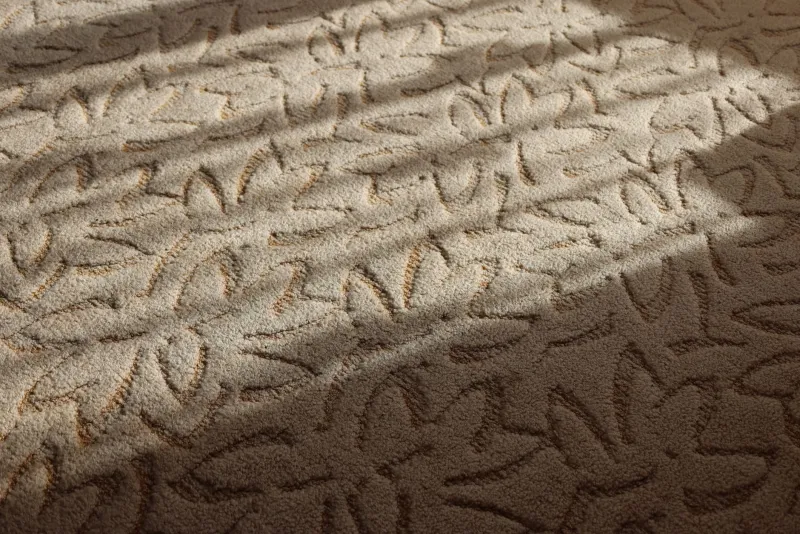
Forget the label on the sample. Look at the construction. A tight twist cut pile is the most practical choice for most pet homes. The yarn is twisted and set so claws are less likely to catch, and there are no loops for a claw to pull. Avoid loose loop piles and Berber-style carpets if your cat uses the stairs as a scratching post; one pulled loop can turn into a run.
Stain treatment helps, but it is not a force field. It buys you time to blot a spill before it sinks into the backing. Solution-dyed nylon and polypropylene are both sensible choices: they are tough, cleanable and hold colour well. Wool is naturally stain-resistant and feels lovely, but it needs quicker attention and a gentler cleaning routine. Wool also holds odour if a pet repeatedly marks the same spot, so it is not the best choice for a household with an elderly dog or an anxious cat.
A no-nonsense shortlist
- Solution-dyed nylon tight twist: the best all-rounder if budget allows. Hard-wearing, decent underfoot, good colour retention.
- Polypropylene tight twist: the practical budget choice. Bleach-cleanable, resistant to most household stains, less soft.
- Wool twist with stain protection: lovely if you are prepared to blot quickly and clean gently.
- Avoid deep shag, loose loops and viscose: they look wonderful and suffer nobly.
Underlay matters more than you think
A dense, supportive underlay makes a carpet feel better and last longer. It also stops the carpet from rucking when a dog turns sharply. Very thick, spongy underlay feels luxurious but can make claws dig in and seams work loose. On stairs, a firm underlay and a properly fitted carpet are essential; a loose stair carpet is an accident waiting to happen. If your pet has frequent accidents, ask about a moisture-resistant underlay, but do not expect it to make the carpet waterproof.
The cleaning routine that actually works
Vacuum little and often. Daily in the pet's favourite spots, twice weekly elsewhere. A vacuum with a good brush bar lifts hair and grit before it works into the pile. Keep a towel by the back door for muddy paws, and use a washable doormat rather than a decorative one.
For accidents, blot, do not rub. Rubbing pushes the mess into the backing and spreads it. Use a dilute solution of mild detergent and warm water, then an enzyme cleaner designed for pet mess. Enzyme cleaners break down the proteins in urine and vomit; ordinary carpet shampoo often just perfumes the problem. Avoid steam cleaning at high temperatures until the stain is gone, as heat can set certain stains. Always check the manufacturer's cleaning instructions before you try anything ambitious.
The accident protocol
- Blot up as much as possible with kitchen roll or a clean cloth.
- Dilute a small amount of mild detergent in warm water and dab from the outside in.
- Rinse with clean water and blot again.
- Apply an enzyme cleaner if the stain is organic.
- Dry thoroughly with a towel and good ventilation. Do not walk on it wet.
Colour and pattern choices that forgive
Mid-tones are the sweet spot. Dark navy shows every white hair; cream shows every muddy paw. A speckled or lightly patterned twist hides the everyday evidence without looking like a hotel corridor. If you have a black cat, avoid pale grey. If you have a golden retriever, avoid dark brown. It sounds obvious, but it is the advice people ignore most often.
When to choose hard flooring instead
If your dog is elderly and incontinent, or your cat marks regularly, a hard floor with a washable rug is kinder to everyone. Carpet can still work in bedrooms and quieter rooms, but the main traffic areas may be better off hard. There is no shame in it. The right floor is the one that suits the life you actually live.
A pet-friendly carpet is not a magic product. It is a tight, sensible construction, a decent underlay, a quick cleaning routine and a realistic colour choice. Get those right and your carpet will survive the Labrador, the landing and the Monday morning surprises.