One Room, Three Moods: Carpet Zoning That Lets Open-Plan Living Breathe

Photo: Basher Eyre , CC BY-SA 2.0, via Wikimedia Commons
Open-plan living is brilliant until you are trying to watch a film while someone chops onions two metres away. The answer is not to build a wall and surrender the light. It is to let the floor do some of the dividing. Carpet zoning is simply the art of using different surfaces, borders and soft boundaries to give an open-plan space a bit of useful structure. Done well, it feels calm rather than chopped up.
Start with the room's real routines
Before you look at a single swatch, watch how the room is actually used. In a typical British open-plan layout, you might have a kitchen at one end, a dining table in the middle and a lounge area near the bi-fold doors. Add a desk in the corner and a dog bed by the radiator, and you have four different lives sharing one long view.
Ask yourself where the wet, messy work happens. Where do people walk with cups of tea? Where does the morning sun land? Where does the TV sit? A carpet zone should follow those habits, not an interior-design mood board. If the cooking end is always splashed and the sofa end is always cosy, the floor should reflect that honestly.
Let the floor do the dividing
The simplest zoning trick is also the most practical: keep hard flooring in the kitchen and carpet in the lounge. That does not mean the room has to look like two separate rooms bolted together. Choose a transition strip that sits neatly in the doorway or along the line where the kitchen units end, and keep the colours related rather than identical. A warm grey carpet next to a soft oak-effect floor will feel more joined-up than a bright red carpet next to pale tiles.
If the whole space is currently carpeted, you can still create zones without ripping everything up. A fitted carpet in the lounge, a matching carpet tile in the workspace and a hard floor in the kitchen can all sit comfortably together. The trick is to keep the transition lines purposeful. A wobbly line across an open room looks like a mistake; a straight line that follows a wall, island or change in ceiling height looks deliberate.
Borders, runners and the soft hint
Not every boundary needs a different floor. An inset carpet border can mark out a lounge area while keeping the same carpet underfoot. A border in a slightly darker tone frames the space and gives the eye something to follow. It is a lovely option in period homes where you want the room to stay open but still feel considered.
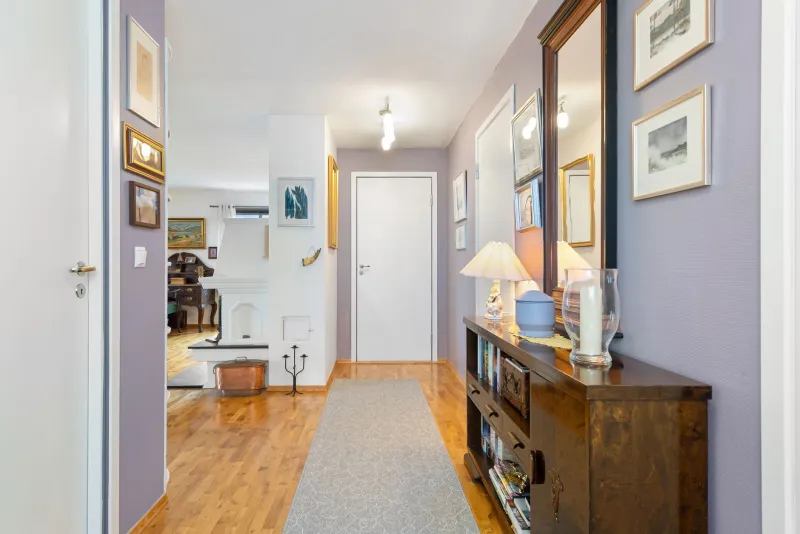
Runners are another gentle way to zone. A runner between the kitchen and the sofa can act like an indoor path, encouraging people to walk in one direction rather than cutting across the middle of the lounge. In a long open-plan room, a runner can also break up an expanse of floor without adding furniture. Just make sure it is properly secured or backed so it does not slide about on hard flooring.
Match the carpet to the job
A lounge carpet needs to cope with socks, sofa feet and the occasional bowl of crisps. A workspace carpet needs to handle chair castors and a bit of foot traffic. A dining zone needs to survive dropped forks and the annual Christmas spill. That does not mean you need three completely different carpets, but it does mean you should be honest about wear.
A hardwearing twist pile is a sensible all-rounder for lounges and dining areas. Carpet tiles are excellent for a home-office corner because a damaged square can be replaced without redoing the whole room. In the kitchen, stick to hard flooring or wipe-clean matting; carpet near a hob or sink is a false economy. If you want softness underfoot in a dining zone, choose a low-pile carpet and keep a washable rug under the table for heavy spills.
Keep the sound in check
One of the quiet victories of carpet zoning is acoustic. Open-plan rooms echo because there are fewer walls and doors to absorb sound. Carpet in the lounge and a rug in the dining area will soften footsteps, TV noise and the clatter of plates. A good underlay adds to that cushioning, though it is worth checking it suits any underfloor heating before you commit.
If you have hard flooring through most of the space, do not underestimate the difference a large rug can make. It will not stop kitchen noise, but it will take the hard edge off a room that otherwise bounces every sound back at you.
Cleaning without a flooring argument
Zoning only works if it is easy to live with. Keep a barrier mat at the garden or hall door, and put a washable rug where muddy paws land. Vacuum the carpet zone weekly and deal with spots as they happen rather than waiting for a grand spring clean. In the kitchen, sweep or hoover crumbs before they migrate into the carpet, and keep a small spot-cleaning kit under the sink for the inevitable tea spill.
A few UK practicalities to check
Before you order anything, check door clearances and the depth of any transition strips. Old Victorian terraces and modern new-builds both have their quirks, and a threshold that sits too high can catch a door or trip a guest. If you have bi-fold doors, make sure the track and frame are not compromised by a new floor edge. And if you are zoning with a border, measure the room carefully; a border that is too narrow can look mean, while one that is too wide can swallow the room.
Open-plan living does not have to mean one long compromise. With a little thought about wear, sound and cleaning, your floor can quietly tell everyone where to cook, where to relax and where to put their feet up. That is zoning without walls, and it is a lot easier to live with than a building project.