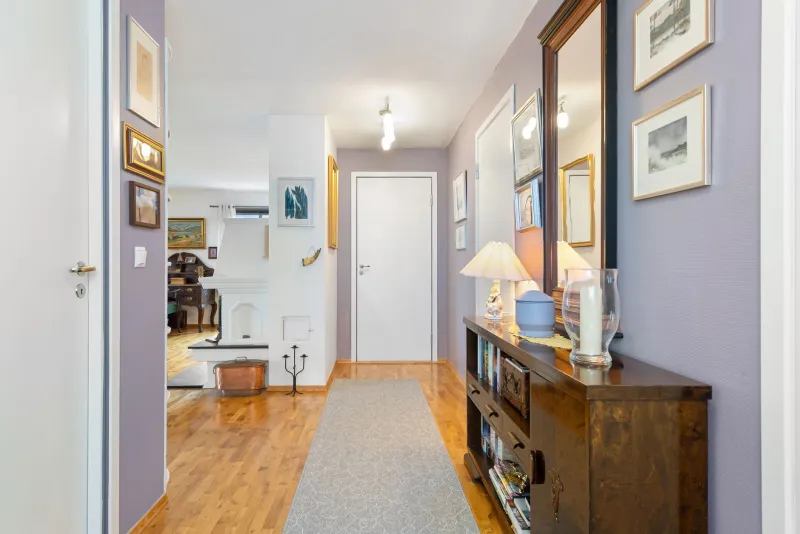
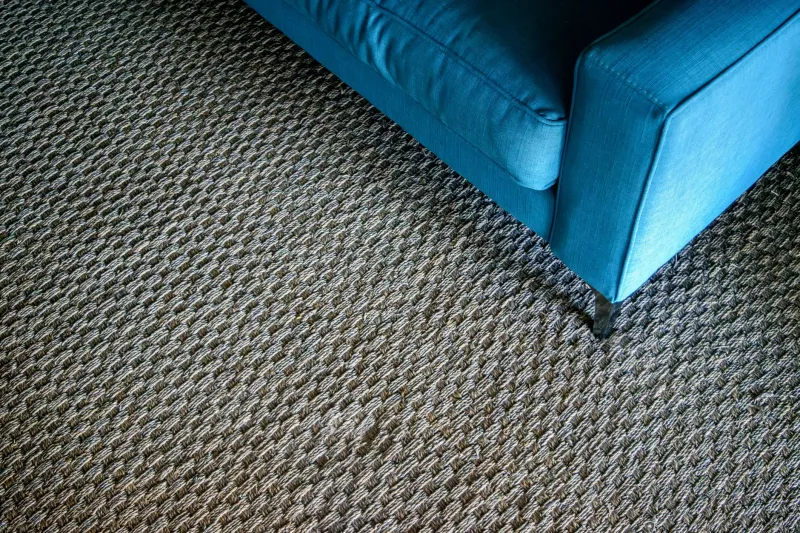
Where Two Floors Meet: A Sensible Handshake Between Carpet and Hard Flooring
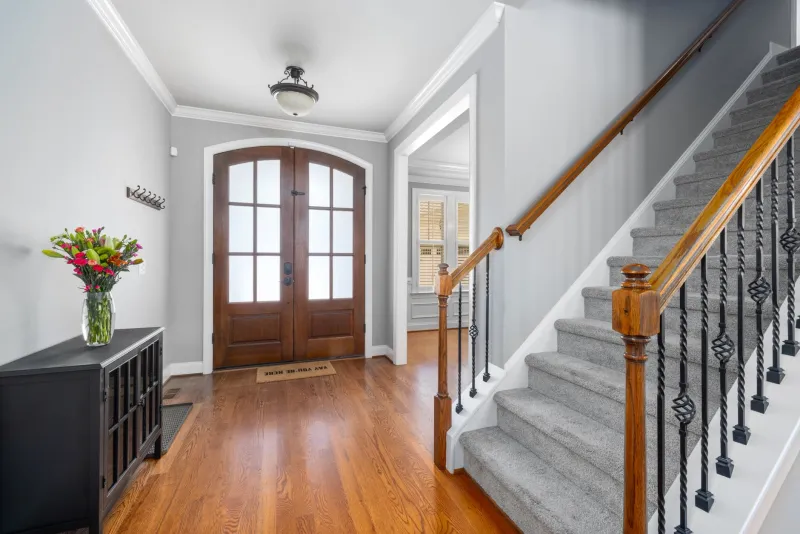
There is a moment on every fitting day when the new carpet finally meets whatever is going on in the hallway. For most of the job, the eye is on pile and colour and whether that swatch was a terrible idea under a November sky. Then the last metre arrives, and suddenly it's all about millimetres.
A threshold is not glamorous. Nobody has ever shown a friend their door bar. But get it wrong and you'll know about it every single day — a lip that catches a toe, a raw edge that starts to travel, a draught that appears from nowhere, a carpet that looks a bit unfinished where the room ends.
So let's talk about the join properly.
Why this little strip does more than it looks
A proper transition is doing three jobs at once. It protects the cut edge of the carpet so the pile doesn't start shredding backwards. It bridges the height difference between two very different materials. And it gives the eye a clean finish line, which is why a room with a good threshold feels done and a room with a bent bit of trim never quite does.
It's also the one place in a carpet installation where two trades, two materials and two sets of tolerances all meet. No wonder it's where the fiddly problems live.
Start with heights, not with profiles
Most planning goes wrong because people choose the metal strip before they've measured anything. Do it the other way round.
Get an offcut of your chosen carpet, plus the actual underlay you're using, and lay it on the gripper at the doorway. A straight edge across the top and a ruler down to the hard floor gives you the real difference. Carpet on standard underlay routinely sits 15–20mm proud of the boards; a glued-down vinyl in the kitchen might be barely 3mm above the concrete. Those two situations need completely different hardware.
Write the number down. It will save an argument later.
The usual suspects, and when each one earns its keep
Cover strip or flat bar. For floors sitting at very similar heights — carpet one side, engineered wood the other, both coming in close to level. It simply caps the join and holds both edges down.
Single or double nape door bar. The classic carpet-to-hard-floor answer. One side has a lip or "nape" that grips the carpet edge, the other side is screwed or glued down over the hard floor. Double nape versions work where there's a bit more of a step.
Ramp or reducing profile. Where the drop is significant, a sloping profile lets you walk from one level to the other without a stumble. Less pretty, considerably safer.
T-bar or H-bar. For joining carpet to carpet, or two hard floors of equal height. Handy if you're matching a landing to a bedroom.
Matwells and edge trims. If you're sinking a doormat into a recess, an angle trim finishes the carpet edge neatly and stops it curling where feet hit it hardest.
Materials matter too. Brushed brass and antique bronze are having a long moment and suit period properties in a way that shiny aluminium never will. Aluminium is cheap, tough and virtually invisible, which is often exactly what you want. Wood-effect profiles blend into laminate and engineered boards without a fuss.
The carpet side of the join
A threshold only looks good if the carpet beneath it is properly finished. That means gripper stopped a reasonable distance back from the doorway rather than running right up to the trim, underlay cut neatly so it doesn't bunch, and the carpet edge cut straight and stretched tight rather than being folded over and hoped for.
Where the carpet meets a hard floor, some fitters use a z-bar — a metal strip that the carpet edge is hooked into — before the threshold goes on top. It adds a step in the process but produces a genuinely crisp edge, and it's well worth asking about if the join is somewhere prominent.
One more thing: carpet shouldn't be tucked under skirting across a doorway opening in a way that fights the threshold. The two fixes need to agree with each other.
Fixing down without causing yourself grief
Screws are the default and the most reliable, but where you're screwing matters. Into timber subfloor or ply: straightforward. Into concrete or screed: you'll need the right plugs and a bit of care. Into a tiled floor, especially a rented one, think hard before drilling — adhesive-fixed profiles and decent grab adhesive will often do the job and can be removed later with a bit of patience and a scraper.
Also watch how deep you go. Nobody wants a fixing that nips a heating pipe or punctures a damp-proof membrane because the screw was 5mm longer than it needed to be.
And do check the door. Adding a profile, plus underlay, plus a thicker carpet, has a habit of eating clearance you thought you had. Swing the door before the adhesive sets, not after.
Little details that separate a good join from an average one
- Take the threshold across the full width of the doorway, into the reveals, so there are no little gaps at either end for grit to gather in.
- Match the profile to the pile height — a deep, chunky saxony can swallow a shallow trim, leaving the hard floor edge exposed.
- On long runs between two rooms, check the threshold doesn't sit proud enough to catch a hoover or a wheeled chair.
- If the two floors are different colours, don't try to match the trim to both. Match it to the door, the handles, or the hard floor, and let the carpet be the carpet.
The short version
Measure the height difference before you buy anything. Choose the profile to suit that number, not the other way round. Let whoever fits the carpet finish the edge properly, then cap it. Fix it with the subfloor in mind, and check the door swing.
It's a strip of metal or wood about as thick as a magazine. Get it right and it will quietly disappear into the background for the next fifteen years, which is the highest compliment a threshold can receive.